Published on:
10 min read
Face Fillers Trends: What’s New and What to Know
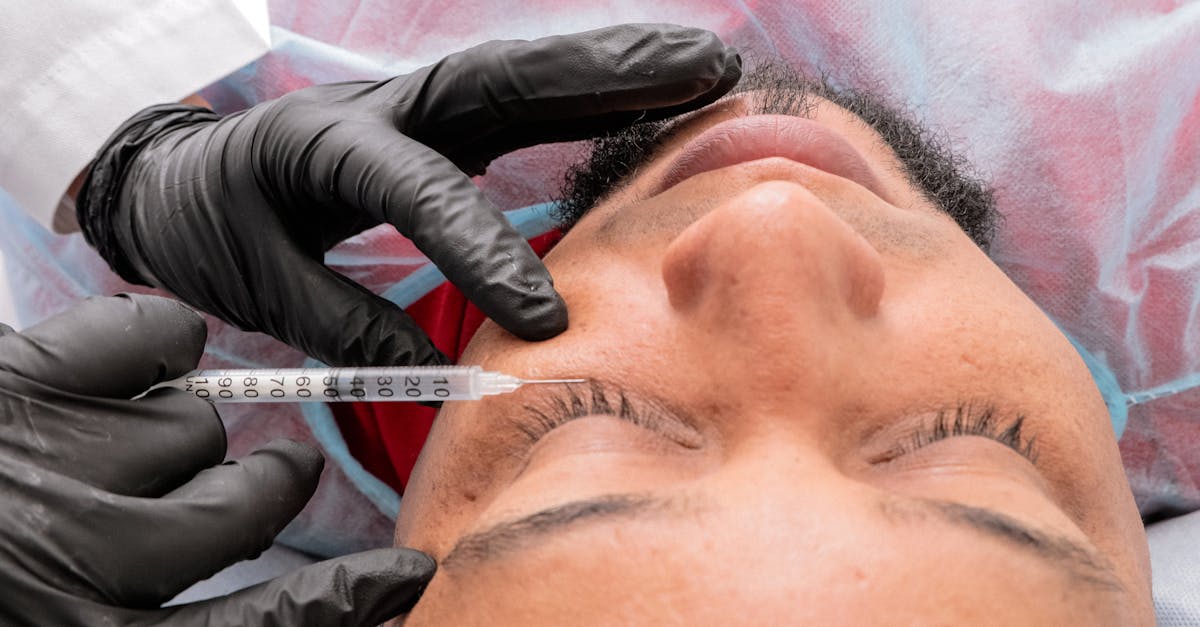
Face fillers are no longer just about “plumping” lips or softening one wrinkle. In 2025, the conversation has shifted toward precision, restraint, and long-term facial balance, with patients asking smarter questions about product type, injector technique, complication risk, and how fillers compare with biostimulators, skin boosters, and energy-based treatments. This article breaks down the most important filler trends shaping modern aesthetic medicine, from the rise of microdosing and jawline contouring to the growing demand for reversibility and natural-looking outcomes. You’ll also learn what popular social media trends get wrong, how to evaluate whether you’re a good candidate, what real costs and maintenance can look like, and which practical questions to ask before booking. If you want a grounded, useful guide that goes beyond hype and helps you make safer, better-informed decisions, this is the one to save.
- •Why face fillers look different now than they did five years ago
- •The biggest filler trends right now: microdosing, jawline work, and regenerative combinations
- •What’s actually new in filler products and techniques
- •The natural-look movement: where it helps and where the marketing gets misleading
- •Safety, longevity, and cost: what smart patients ask before booking
- •Key takeaways: how to decide whether fillers are right for you now
- •Conclusion: informed decisions beat aesthetic hype
Why face fillers look different now than they did five years ago
The biggest shift in face fillers is philosophical, not just technical. Five years ago, many patients walked into clinics asking to “fill lines” or “add volume” to one isolated area, often the lips or nasolabial folds. Today, experienced injectors increasingly talk about facial harmony, tissue quality, and movement. That means fewer overfilled cheeks, fewer uniformly puffy lips, and more emphasis on subtle structural support. In practical terms, many clinics now use smaller amounts across multiple areas rather than placing a large volume in one spot.
This change reflects both patient demand and a better understanding of how faces age. Volume loss happens in compartments, bone resorption changes support, and skin quality affects how filler sits. A 38-year-old with early temple hollowing and under-eye shadowing may benefit more from strategic cheek support than from directly filling the tear trough. That is a very different approach from trend-driven treatment plans of the late 2010s.
Social media also played a surprising role. Patients have seen the downside of overdone results in high-definition video and started asking for what many clinicians call “undetectable injectables.” The trend now is to look rested, not altered.
Why it matters: subtle work usually ages better in photos and in motion.
Pros of this newer approach:
- More natural facial expression
- Lower chance of obvious overcorrection
- Often better long-term aesthetic balance
- Results can feel less dramatic at first
- It may require more planning over multiple appointments
- A conservative injector may say no to trendy requests that do not suit your anatomy
The biggest filler trends right now: microdosing, jawline work, and regenerative combinations
Three trends dominate current filler practice: smaller-dose treatments, lower-face contouring, and combining fillers with regenerative procedures. Microdosing, sometimes called “baby filler,” uses minimal product to refine rather than transform. Instead of 1 to 2 mL placed in a single zone, an injector may use fractional amounts in the lips, chin, or prejowl area. This appeals to first-time patients and professionals who want improvement without coworkers noticing.
Jawline and chin treatments have also grown sharply, especially among patients in their late 20s to 40s. The reason is simple: lower-face definition reads well on video calls and photos. A patient with mild chin retrusion may see more balance from chin filler than from adding volume to the lips. In men, stronger lateral jaw definition remains popular, though skilled injectors are now more careful to preserve sex-specific anatomy instead of using a one-size-fits-all contour.
Another major trend is pairing hyaluronic acid filler with other modalities. For example, a patient with acne scarring, early laxity, and cheek deflation may get filler for structure, radiofrequency microneedling for texture, and a biostimulator such as poly-L-lactic acid or calcium hydroxylapatite to support collagen remodeling over time. This combination approach often produces a more believable result than filler alone.
Pros of combination treatment plans:
- Addresses volume, skin texture, and laxity together
- May reduce the need for repeated large filler sessions
- Can produce longer-lasting overall improvement
- Higher upfront cost
- More variables in healing and scheduling
- Requires a provider who understands sequencing, not just injecting
What’s actually new in filler products and techniques
The most meaningful product innovation is not that fillers suddenly last forever. It is that manufacturers now offer more tailored rheology, meaning differences in firmness, spread, lift capacity, and tissue integration. In plain English, injectors can choose products more precisely for the area being treated. A soft, flexible hyaluronic acid gel may work better for superficial lip refinement, while a firmer product may suit chin projection or cheek support. The trend is toward matching product behavior to anatomy instead of using one “favorite filler” everywhere.
Technique has evolved too. Many injectors now rely more heavily on cannulas in selected areas, especially the midface and tear trough, to potentially reduce bruising and lower the chance of penetrating a vessel. Needles are still widely used, particularly where precision placement is essential, but the conversation is more nuanced than “cannula good, needle bad.” The best tool depends on anatomy, injector skill, and the treatment goal.
Ultrasound guidance is another important development. While not yet standard in every clinic, more advanced practices now use ultrasound to map filler placement, evaluate previous product, and manage complications. That is especially valuable for revision patients who do not know what was injected years earlier.
Real-world example: a patient with persistent under-eye puffiness after multiple treatments may discover on ultrasound that filler has migrated or was placed too superficially. Instead of adding more, a safer plan may involve dissolving and reassessing.
Why it matters: newer techniques are making fillers less guesswork-driven and more anatomy-led, which can improve both safety and satisfaction when the provider is properly trained.
The natural-look movement: where it helps and where the marketing gets misleading
“Natural results” is now the most overused phrase in aesthetic medicine, and it can mean very different things. For one patient, natural may mean friends notice they look fresher but cannot pinpoint why. For another, it may mean keeping visible signs of age while softening only the most distracting ones. The good news is that the industry has moved away from the obviously overfilled aesthetic. The bad news is that natural-looking filler can still be poorly planned, and subtle marketing language does not automatically equal subtle treatment.
One common misconception is that small syringes always produce safer or more conservative outcomes. In reality, 0.5 mL placed in the wrong plane can look unnatural, while 2 mL thoughtfully distributed across cheeks, temples, and chin can look completely balanced. Technique, anatomy, and restraint matter more than the marketing term used on Instagram.
Another issue is trend copying. A lip shape that flatters a 22-year-old influencer with a short philtrum may look heavy on someone with different proportions. Likewise, a sharply snatched jawline may photograph well but feel discordant in real life if the cheeks and chin are not proportionate.
Pros of the natural-look trend:
- Encourages restraint and individualized planning
- Reduces the social pressure for dramatic transformations
- Usually creates better long-term facial harmony
- The term is often vague and overpromised
- Patients may underestimate cost because subtle work can still require expertise
- Some providers use “natural” to market filler-heavy plans that are not actually minimal
Safety, longevity, and cost: what smart patients ask before booking
Fillers are common, but common does not mean casual. In 2023, the American Society of Plastic Surgeons reported more than 5.2 million soft tissue filler procedures in the United States, which shows just how mainstream they have become. Even so, bruising, swelling, asymmetry, delayed nodules, and vascular occlusion remain real risks. The safest trend in aesthetics is not a new product. It is better patient screening, informed consent, and choosing injectors who know how to prevent and manage complications.
Longevity is another area where expectations drift from reality. Hyaluronic acid fillers may last roughly 6 to 18 months depending on the product, area, metabolism, and mobility. Lips often break down faster than cheeks. High-movement areas and frequent exercise can shorten visible longevity in some patients. Biostimulators can last longer, but they are less reversible and require careful selection.
Cost varies widely by city and clinic. In many U.S. markets, hyaluronic acid filler is commonly priced between about $700 and $1,200 per syringe, with premium urban practices often charging more. A subtle balancing treatment may still need 2 to 4 syringes across the full face, which surprises many first-timers.
Questions worth asking at consultation:
- What product are you recommending, and why this one for my anatomy?
- How many syringes do you realistically expect now and for maintenance?
- What are your protocols for vascular occlusion and emergency management?
- Do you ever advise dissolving old filler before adding new?
Key takeaways: how to decide whether fillers are right for you now
If you are considering fillers in 2025, the smartest move is to think less about trend chasing and more about fit. The right treatment depends on your anatomy, age-related changes, skin quality, budget, and tolerance for maintenance. Someone with early volume loss and good skin elasticity may do well with conservative hyaluronic acid filler. Someone with crepey skin and laxity may be disappointed by filler alone and get more value from combining it with skin-tightening or collagen-stimulating treatments.
Use these practical guidelines before you book:
- Bring photos from 3 to 5 years ago, not filtered selfies. That gives the injector a better baseline for what “you” looks like.
- Ask for a full-face assessment even if you only care about one area. Isolated treatment can throw off proportions.
- Start with a conservative plan. It is easier to add than to reverse an overfilled look.
- If you already have older filler, ask whether imaging or dissolving should come before new injections.
- Budget for maintenance, not just the first visit. A result you cannot maintain may not be the best plan.
- Do not choose a provider based only on before-and-after photos. Ask about training, emergency protocols, and complication experience.
Conclusion: informed decisions beat aesthetic hype
Face fillers are evolving in a healthier direction. The best current trends emphasize precision, moderation, and full-face planning rather than chasing a single viral look. That is good news for patients, because natural results usually come from better assessment, not just better marketing. If you are considering treatment, your next step is simple: book a consultation focused on anatomy, safety, and long-term planning instead of asking for a trending feature by name.
Go in with clear goals, old photos, and a realistic budget. Ask what problem is actually being treated, what product is being used, how complications are handled, and whether filler is even the best option for you right now. A thoughtful injector may recommend less filler, staged treatment, or a different approach altogether. That is often a sign of expertise, not upselling. In aesthetics, the most modern decision is not doing more. It is choosing what truly fits your face.
Published on .
Share now!
RM
Ryan Mitchell
Author
The information on this site is of a general nature only and is not intended to address the specific circumstances of any particular individual or entity. It is not intended or implied to be a substitute for professional advice.