Published on:
10 min read
Gaming PCs in 2026: Top Trends Shaping the Future
Gaming PCs are entering a new phase in 2026, shaped by smarter upscaling, AI-assisted performance tuning, more efficient GPUs, faster storage, and a growing shift toward hybrid local-and-cloud gaming. This article breaks down the trends that actually matter to buyers, builders, and enthusiasts, not just the flashy marketing terms. You’ll get practical insight into where frame rates are improving, why power efficiency is becoming as important as raw speed, how display technology is changing what counts as a “balanced” build, and which upgrades are most likely to hold value over the next few years. If you’re planning a new rig, extending the life of an older system, or trying to understand where the gaming PC market is headed, this guide gives you concrete examples, tradeoffs, and actionable advice you can use right away.
- •Why 2026 Feels Like a Turning Point for Gaming PCs
- •AI Upscaling and Frame Generation Are Becoming Standard, Not Optional
- •Efficiency, Thermals, and Noise Are Now Core Buying Factors
- •The New Balanced Build: 1440p, Fast SSDs, and Smarter Component Pairing
- •Cloud Integration, Handheld Ecosystems, and the Rise of the Hybrid Gamer
- •Key Takeaways: How to Buy or Upgrade Smart in 2026
- •Conclusion
Why 2026 Feels Like a Turning Point for Gaming PCs
Gaming PCs in 2026 are no longer defined by one simple question: how many frames can the GPU push at native resolution? The conversation has widened to include efficiency, AI acceleration, frame generation quality, thermals, acoustics, and how well a system adapts to 1440p ultrawide or 4K high refresh displays. That shift matters because the average enthusiast is no longer building just for today’s games. They are building for a software ecosystem that changes every quarter through driver updates, upscaling improvements, and game engine patches.
A major reason this year feels different is the maturity of technologies that were experimental only a few years ago. Features like AI-driven upscaling and frame interpolation are now central to how modern games are optimized. In many AAA titles, a mid-to-high-end card can effectively double perceived smoothness when these features are enabled, though image quality and latency still vary by implementation. Real-world examples include demanding titles such as Cyberpunk 2077 and Alan Wake 2, where advanced rendering settings can overwhelm even strong GPUs without intelligent assistance.
At the same time, gamers are feeling the pressure of pricing. Flagship components remain expensive, while electricity costs and heat output matter more than they used to, especially in compact apartments or shared spaces. That is pushing buyers toward smarter system balance rather than brute-force spending.
The big takeaway is that 2026 rewards informed decisions. The best gaming PC is no longer simply the most powerful one. It is the machine that matches your display, game library, budget ceiling, and tolerance for noise, upgrades, and energy use.
AI Upscaling and Frame Generation Are Becoming Standard, Not Optional
The single most important gaming PC trend in 2026 is the normalization of AI-assisted rendering. Technologies once treated as bonus features now shape buying decisions as much as raster performance. For many players, the real-world difference between a good GPU and a great one is no longer native benchmark numbers alone. It is how cleanly that card handles upscaling, frame generation, anti-lag features, and driver-level optimization.
This matters because modern game engines are heavier than ever. Unreal Engine 5 titles, with technologies like Nanite and Lumen, can be visually stunning but brutally demanding. A GPU that struggles at native 4K may still deliver an excellent experience using quality-mode upscaling and well-implemented frame generation. In practical terms, that can mean moving from 45 fps to a perceived 80 to 100 fps experience in select titles, though competitive gamers still need to watch for latency penalties.
There are clear benefits and tradeoffs.
Pros:
- Extends the useful life of midrange GPUs
- Makes 1440p high-refresh and 4K gaming more affordable
- Can reduce the need for immediate hardware upgrades
- Visual artifacts still appear in fast motion or complex scenes
- Input latency can worsen depending on the game and settings
- Support quality differs significantly from one title to another
Efficiency, Thermals, and Noise Are Now Core Buying Factors
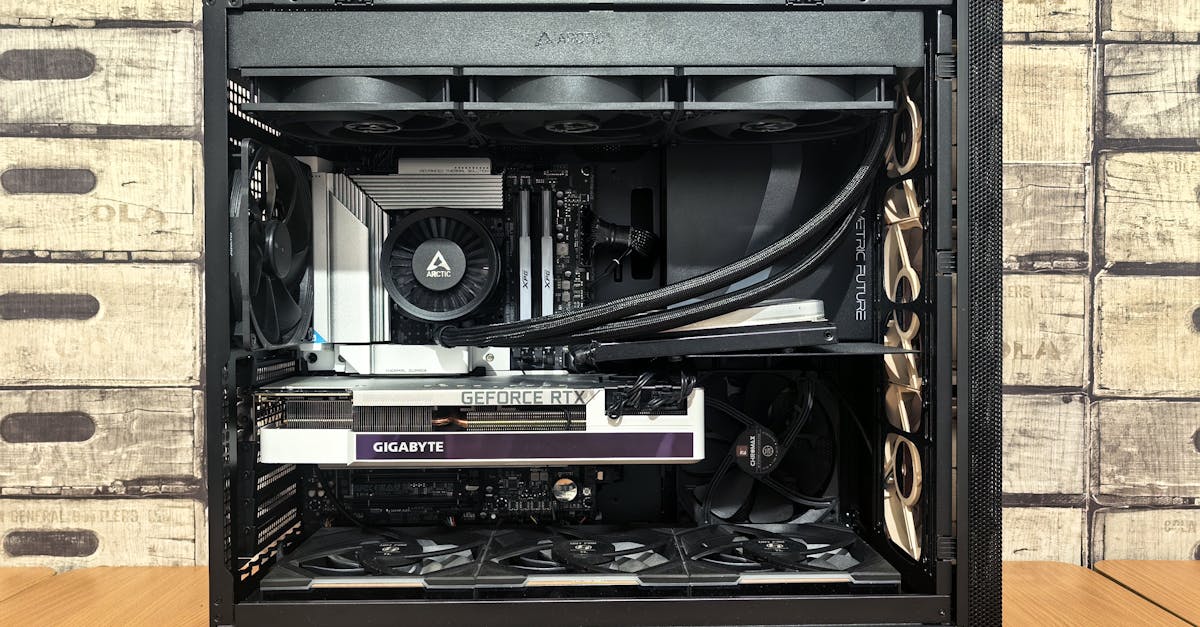
For years, gaming PC marketing focused on peak performance numbers, but 2026 buyers are paying much closer attention to watts, case airflow, cooler size, and everyday noise levels. That shift is overdue. A high-end system that sounds like a hair dryer after 30 minutes of gaming is not a premium experience, no matter how impressive the frame counter looks.
This change is partly economic. In regions with high electricity prices, long gaming sessions on power-hungry systems add noticeable operating costs over a year. It is also practical. Many players now keep their PCs in bedrooms, dorms, or compact workspaces where heat buildup and fan noise become impossible to ignore. A machine drawing 150 to 250 watts less under load can change the feel of a room, especially in summer.
Component makers are responding with larger vapor-chamber coolers, smarter fan curves, improved case mesh designs, and better undervolting tools in BIOS and companion software. Builders who spend time tuning often find a sweet spot where they lose only 3 to 7 percent performance while cutting power draw and temperatures much more significantly. That is one of the highest-value optimizations available today.
Here is the real strategic shift: efficiency is becoming a form of performance. Lower thermals can preserve boost behavior, reduce throttling, and improve component lifespan.
Pros:
- Quieter systems are easier to live with every day
- Lower heat improves comfort and often stability
- Better efficiency can reduce long-term ownership costs
- Premium coolers and cases still add to upfront cost
- Small-form-factor builds require more careful planning
- Some factory-overclocked parts prioritize benchmarks over sane acoustics
The New Balanced Build: 1440p, Fast SSDs, and Smarter Component Pairing
One of the most useful trends for buyers is the industry’s move toward better-balanced gaming PCs. In 2026, the sweet spot is no longer chasing the absolute top GPU at the expense of everything else. For most players, a well-matched system targeting 1440p at 144 Hz or 165 Hz delivers stronger value than an unbalanced build aimed at 4K bragging rights.
That means pairing parts intelligently. A modern 8-core or strong 6-core gaming CPU is enough for most real-world scenarios, while excess spending often makes more sense on display quality, SSD capacity, and cooling. Storage especially has become more important as game installs regularly exceed 100 GB, and some major releases push beyond 150 GB with texture packs. A 2 TB NVMe SSD now feels far more practical than the once-standard 1 TB setup.
The display side matters just as much. OLED and mini-LED monitors are changing user expectations around contrast, HDR, and motion clarity. Once you experience a good 1440p OLED panel, spending everything on GPU horsepower and settling for a mediocre screen starts to look backwards.
A smart 2026 build usually emphasizes:
- A GPU suited to your monitor resolution, not your ego
- At least 32 GB of RAM for headroom in modern multitasking and newer games
- A 2 TB primary SSD to avoid constant uninstall cycles
- A power supply with room for future upgrades, not just current needs
Cloud Integration, Handheld Ecosystems, and the Rise of the Hybrid Gamer
Another major trend shaping gaming PCs in 2026 is that the desktop no longer lives alone. More players now move between a main gaming rig, a handheld PC, a laptop, and cloud services depending on where they are and what they are playing. This does not mean cloud gaming has replaced local hardware. It means local hardware is now part of a wider ecosystem.
The clearest real-world example is the player who uses a desktop for competitive shooters and visually demanding single-player games, then shifts to a handheld or cloud session for RPG grinding, indie titles, or travel. Services such as cloud streaming and in-home game streaming have become more usable thanks to faster home internet, Wi-Fi 6E and Wi-Fi 7 adoption, and lower-latency encoding improvements. In many urban markets, gigabit fiber is no longer unusual, making hybrid play far more practical than it was in 2021 or 2022.
For PC builders, this trend changes priorities. Save files, launcher ecosystems, controller support, and display scaling matter more. So do low-power standby states, remote wake features, and quiet idle behavior.
Pros:
- Greater flexibility across devices and locations
- Better return on a digital game library shared across hardware types
- Easier access to games without always sitting at a desk
- Internet quality still determines whether cloud play feels acceptable
- Compression artifacts can hurt image quality in dark or fast scenes
- Subscription costs can quietly stack up over time
Key Takeaways: How to Buy or Upgrade Smart in 2026
If you are making a gaming PC decision in 2026, the most important move is to align your build with your actual habits. Start with the monitor you own or plan to buy. If you game at 1440p, do not overspend for a card whose value only appears at 4K. If you play esports titles, prioritize latency, CPU consistency, and high refresh stability over cinematic settings you may never use.
Next, evaluate software support as seriously as hardware specs. A card with better upscaling quality, broader frame-generation adoption, and stronger driver updates can deliver better long-term value than a rival that wins a few launch-day benchmarks. Also think in terms of system lifespan. Spending slightly more on a quality power supply, a quieter case, and a larger SSD often pays off longer than chasing one tier higher on the GPU stack.
Practical tips:
- Build around your display resolution and target frame rate
- Favor 32 GB of RAM for a smoother multitasking and gaming experience
- Choose at least 2 TB of fast SSD storage if you play modern AAA games regularly
- Leave thermal headroom with a case and cooler that are not operating at their limit
- Test undervolting before replacing parts; it can improve noise and temperatures dramatically
- Compare total platform cost, not just CPU or GPU sticker price
Conclusion
Gaming PCs in 2026 are being shaped less by raw spec wars and more by intelligent system design. AI-assisted rendering, efficiency-focused hardware choices, balanced 1440p builds, and hybrid play across desktop, handheld, and cloud environments are defining where the market is headed. For most buyers, the winning strategy is not to chase the most expensive parts. It is to match hardware with your monitor, game library, budget, and tolerance for heat and noise.
If you are upgrading this year, start by identifying your biggest current pain point: low frame rates, limited storage, loud cooling, or poor display quality. Then fix that bottleneck first. A targeted upgrade plan will usually deliver more value than a full rebuild. In 2026, the smartest gaming PC is the one designed around real use, not hype.
Published on .
Share now!
SH
Sophia Hale
Author
The information on this site is of a general nature only and is not intended to address the specific circumstances of any particular individual or entity. It is not intended or implied to be a substitute for professional advice.