Published on:
10 min read
Dental Implant Trials: New Trends Shaping Smiles Today
Dental implant research is moving faster than many patients and even some clinicians realize. Today’s trials are not just testing whether implants work, but how to make them heal faster, last longer, and fit more naturally into digital, personalized care. From immediate-load protocols and 3D-printed surgical guides to biomaterials that may improve bone integration, the newest studies are reshaping what treatment timelines and outcomes can look like. This article breaks down the most important trends in plain English, including what clinical trials are actually measuring, where the evidence looks promising, and where the hype still runs ahead of the data. You’ll also find practical questions to ask your dentist or oral surgeon, balanced pros and cons of emerging approaches, and real-world context on cost, recovery, and long-term success so you can make smarter decisions before committing to treatment.
- •Why Dental Implant Trials Matter More Than Ever
- •The Biggest Trends Researchers Are Testing Right Now
- •What the Latest Evidence Says About Success, Speed, and Safety
- •How Technology Is Changing Implant Trials and Patient Experience
- •Who Benefits Most From Emerging Implant Approaches and Who Should Be Cautious
- •Key Takeaways and Smart Questions to Ask Before You Commit
- •Actionable Conclusion: How to Use Implant Research to Make a Better Decision
Why Dental Implant Trials Matter More Than Ever
Dental implants are no longer a niche solution reserved for a small group of patients with complex restorative needs. They have become mainstream, and that shift is exactly why clinical trials matter so much today. According to the American Academy of Implant Dentistry, more than 3 million people in the United States are living with dental implants, and that number has been estimated to grow by roughly 500,000 each year. As demand rises, researchers are under pressure to improve not only implant survival rates but also comfort, treatment speed, aesthetics, and affordability.
Modern implant trials are asking sharper questions than older studies did. Instead of simply tracking whether an implant remains in place after five years, many trials now measure soft-tissue stability, marginal bone loss, patient satisfaction, digital workflow accuracy, and time to functional loading. That matters because a patient who keeps an implant technically intact but struggles with gum recession, bite discomfort, or repeated maintenance may not consider the result a true success.
A practical example is the growing interest in immediate-placement implants, where a tooth is extracted and an implant is placed in the same visit. For the right candidate, this can shorten treatment by months. But trials have to determine who benefits most and where the risks rise.
Key reasons these trials matter include:
- They help identify which patients are good candidates for faster protocols.
- They reveal whether new materials truly improve healing or simply raise costs.
- They compare digital planning tools against conventional approaches in measurable ways.
- They provide evidence that can shape insurance policy, clinical guidelines, and informed consent discussions.
The Biggest Trends Researchers Are Testing Right Now
The most important trend in dental implant trials is the shift toward faster, more personalized treatment. Researchers are heavily focused on immediate loading, which means attaching a temporary or even functional restoration sooner than traditional protocols allowed. In older workflows, patients often waited three to six months before final restoration. Newer studies are testing whether carefully selected patients with good primary stability can safely cut that timeline down to days or weeks.
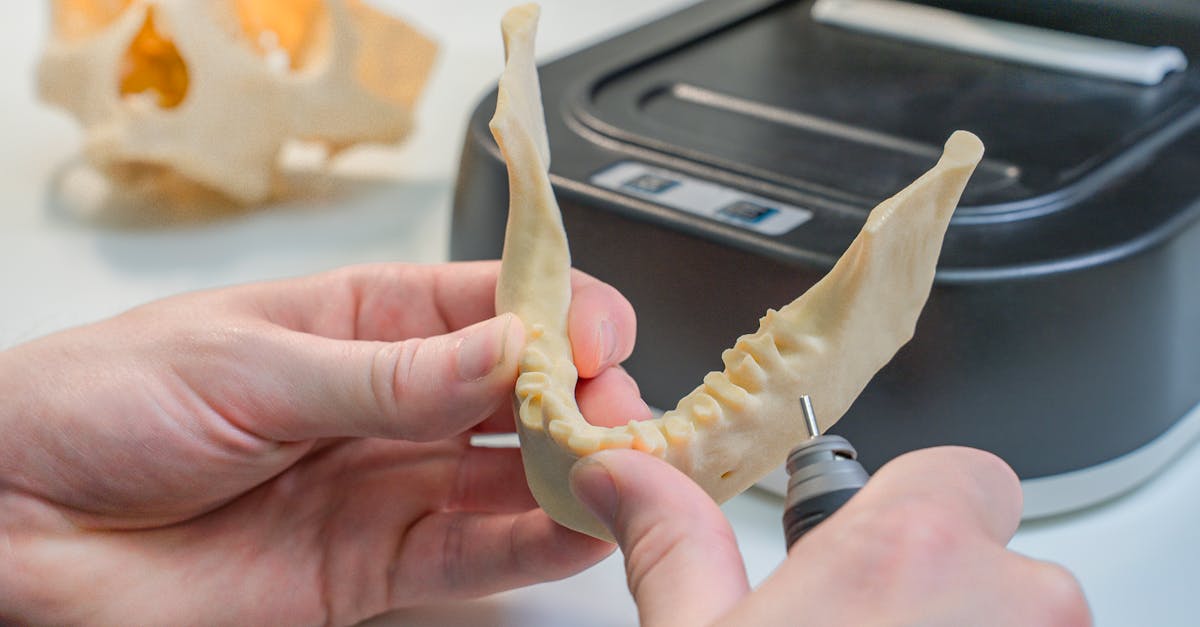
Another major area is digital dentistry. Clinical trials are evaluating cone beam CT-guided planning, intraoral scanning, and 3D-printed surgical guides to see whether they improve accuracy enough to reduce complications. In real practice, a digitally guided implant can help a surgeon avoid anatomical structures and align the implant with the future crown more precisely. That is not just a technical win. It can mean less chair time, fewer adjustments, and better esthetics in the front of the mouth.
Researchers are also exploring biomaterials and surface engineering. Roughened implant surfaces, hydrophilic coatings, and regenerative membranes are being studied for their ability to improve osseointegration, the process where bone bonds with the implant. Some trials are even looking at platelet-rich fibrin and growth-factor support in extraction sites with limited bone.
Current trends under study include:
- Immediate placement after extraction
- Immediate or early loading protocols
- Narrow-diameter implants for limited bone width
- Zirconia implants as a metal-free alternative to titanium
- AI-assisted treatment planning and risk prediction
What the Latest Evidence Says About Success, Speed, and Safety
The good news is that conventional dental implants already have a strong evidence base. Large reviews have commonly reported survival rates above 90 percent after 10 years, with many systems performing even better in healthy, well-managed patients. That high benchmark is important because it means any new technique has to prove more than novelty. It has to match or improve outcomes without creating new failure points.
Immediate-placement and immediate-loading trials illustrate this balance well. In carefully selected cases, especially when bone quality is strong and the implant achieves high primary stability, short-term results can be excellent. A patient missing an upper lateral incisor, for example, may be able to leave the office with a temporary tooth the same day. From a quality-of-life perspective, that is a huge improvement over a removable flipper worn for months. However, not every patient is an ideal candidate. Smokers, uncontrolled diabetics, and people with active periodontal disease often face higher complication rates.
Here is the realistic pros and cons picture many studies suggest:
- Pros:
- Faster aesthetics and function
- Fewer surgical visits in some cases
- Potentially shorter total treatment timeline
- Higher patient satisfaction when successful
- Cons:
- More technique-sensitive planning
- Higher risk if infection or inadequate bone is present
- Less room for error in implant positioning
- Some protocols still lack robust long-term comparative data
How Technology Is Changing Implant Trials and Patient Experience
Technology is not just making implants look more advanced in brochures. It is changing how trials are designed and how patients experience treatment from consultation to crown delivery. A decade ago, many implant studies relied on standard radiographs, stone models, and manual charting. Today, researchers can track bone levels with higher imaging precision, compare digital planning accuracy to actual implant position, and collect patient-reported outcomes through structured questionnaires instead of anecdotal follow-up notes.
One of the biggest practical shifts is the rise of full digital workflows. A patient can have a cone beam CT scan, an intraoral scan, and a virtual implant plan created in software before surgery even begins. In a trial setting, that makes protocols easier to standardize across multiple centers. If five clinics use the same planning logic and guide fabrication method, researchers can better compare outcomes. For patients, this often means fewer surprises and a more visual explanation of treatment.
Artificial intelligence is starting to enter the conversation too. While still early, some systems are being evaluated for their ability to identify bone volume, flag anatomical risk areas, and estimate restorative fit. That could eventually help clinicians reduce planning errors, although it will not replace surgical judgment.
The patient-facing advantages are clear:
- Better visualization before treatment starts
- More precise implant positioning in straightforward cases
- Potential reduction in appointment time and remakes
- Improved communication between surgeon, restorative dentist, and lab
- Digital systems can be expensive and raise treatment fees
- Accuracy still depends on proper scanning and guide seating
- Technology may create false confidence if fundamentals are weak
Who Benefits Most From Emerging Implant Approaches and Who Should Be Cautious
One of the most useful things coming out of modern implant trials is a clearer picture of patient selection. The future of implant dentistry is not simply doing everything faster for everyone. It is matching the right protocol to the right biology, anatomy, and risk profile. A healthy 32-year-old who loses a front tooth in a cycling accident is a very different candidate from a 68-year-old with osteoporosis, a long smoking history, and years of untreated gum disease.
Current evidence suggests the best candidates for streamlined or innovative protocols often share a few traits: stable overall health, good oral hygiene, adequate bone volume, and strong motivation to follow post-operative instructions. In these cases, immediate placement or digitally guided surgery may deliver excellent results with fewer appointments. A real-world example would be a professional who cannot easily manage multiple long visits and values a shorter visible tooth-loss period.
Patients who should ask more cautious questions include:
- Smokers, especially heavy daily smokers
- People with uncontrolled diabetes or immune-related conditions
- Patients with active periodontitis or poor plaque control
- Individuals taking medications linked to bone turnover concerns
- Anyone with severe bone loss requiring grafting before stable placement
Key Takeaways and Smart Questions to Ask Before You Commit
If you are considering an implant and hearing terms like immediate load, guided surgery, zirconia, or biologic enhancement, the most practical move is not to chase the newest option. It is to ask better questions. Clinical trials can tell you what is promising, but your own anatomy, health status, and goals determine whether a trend actually applies to you.
Start by asking your dentist or oral surgeon how they decide between conventional and accelerated protocols. Ask whether your case resembles the patients included in the studies they reference. A single missing tooth with thick bone and healthy gums is not the same as a full-mouth rehabilitation with grafting. You should also ask what outcomes they personally track. Survival rate alone is not enough. Bone stability, gum aesthetics, bite comfort, and maintenance frequency all matter.
Smart questions include:
- Am I a candidate for immediate placement or loading, and why?
- What are the short-term benefits versus the long-term evidence?
- How many similar cases have you completed in the past year?
- Will this require bone grafting or soft-tissue augmentation?
- What happens if the implant does not integrate as planned?
- What is the total cost, including provisional restorations and follow-up care?
Actionable Conclusion: How to Use Implant Research to Make a Better Decision
Dental implant trials are reshaping care in meaningful ways, especially around faster loading, digital planning, and better biomaterials. But the real value of this research is not that it makes every treatment quicker. It is that it helps identify which patients can safely benefit from newer protocols and which ones need a slower, more conservative path.
If you are exploring implants, take three next steps. First, request a consultation that includes imaging, a discussion of alternatives, and a personalized risk assessment. Second, ask your provider to explain whether their recommendation is backed by long-term evidence or mainly early data. Third, compare treatment plans based on predictability, not just speed or marketing language.
A great implant outcome is rarely about choosing the trendiest option. It is about choosing the right protocol for your mouth, your health, and your long-term goals. Use the science as a guide, ask sharper questions, and make a decision that you will still feel good about years from now.
Published on .
Share now!
AS
Avery Stevens
Author
The information on this site is of a general nature only and is not intended to address the specific circumstances of any particular individual or entity. It is not intended or implied to be a substitute for professional advice.