Published on:
10 min read
Start a Business in 2026: Trends Shaping New Founders
Starting a business in 2026 will not look like launching one in 2019, or even 2023. Founders are entering a market shaped by AI-native workflows, higher customer acquisition costs, tighter funding, platform dependence, and customers who expect faster delivery, better personalization, and stronger trust signals from day one. This article breaks down the trends that will matter most to new entrepreneurs, from lean solo-founder operations and niche business models to compliance, audience building, and practical go-to-market decisions. You will find specific examples, realistic tradeoffs, and actionable guidance for choosing a business model that can survive the noise. If you want to build something resilient instead of simply chasing hype, this guide will help you understand where the real opportunities are in 2026 and what mistakes new founders should avoid early.
- •Why 2026 Will Reward Leaner, Faster, More Focused Founders
- •AI-Native Businesses Will Have an Edge, but Only If They Solve Real Problems
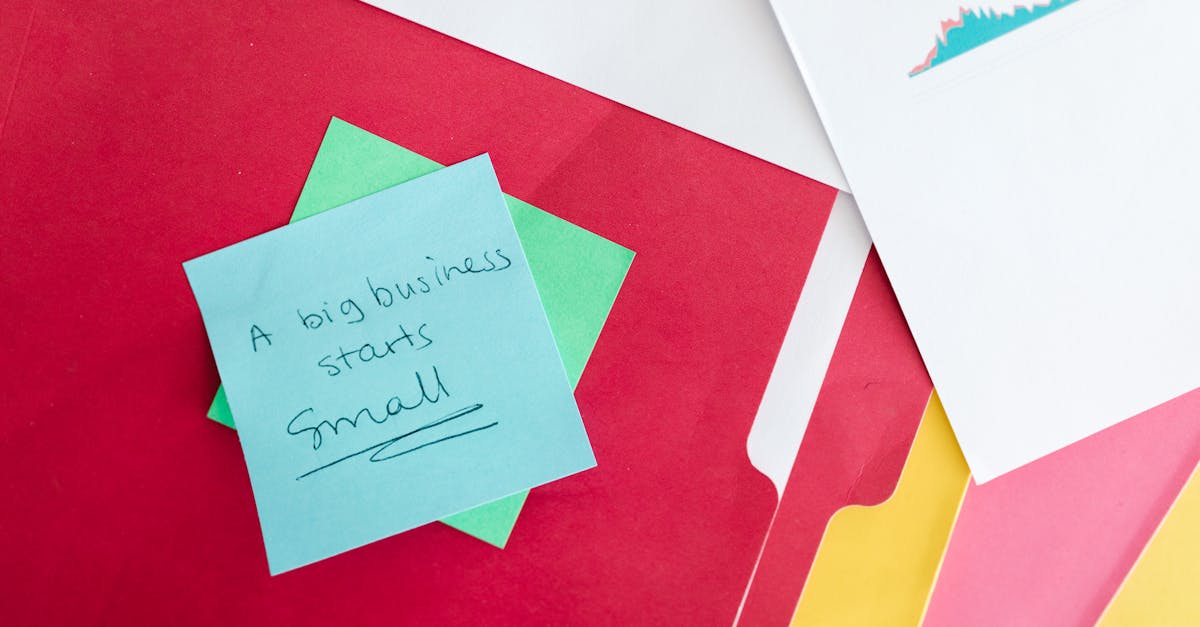
- •Niche Beats Broad: The Best New Businesses Will Go Smaller Before They Go Bigger
- •Distribution Will Matter More Than the Idea Itself
- •Trust, Compliance, and Operational Discipline Are Becoming Competitive Advantages
- •Key Takeaways: How to Build a Better Business in 2026
Why 2026 Will Reward Leaner, Faster, More Focused Founders
The biggest shift facing new founders in 2026 is not just technology. It is the economics of starting small and moving fast. Over the last few years, cloud tools, no-code software, AI assistants, and global freelance marketplaces have dramatically lowered the cost of launching a company. At the same time, customer attention has become more expensive. In many industries, paid acquisition costs rose sharply after privacy changes weakened ad targeting, and venture investors became more selective after the post-2021 funding reset. That combination changes how smart businesses get built.
In practical terms, founders now have a stronger chance of reaching early revenue with tiny teams. A solo entrepreneur can use AI for market research, customer support drafts, ad creative testing, and first-pass bookkeeping. Shopify, Stripe, HubSpot, Notion, and Webflow can replace what once required an operations hire, a developer, and an agency. This matters because runway buys learning, and learning is usually the true bottleneck in year one.
But low startup costs create a new problem: more competition. If anyone can launch quickly, mediocre businesses flood the market. The winners in 2026 will likely be founders who pair speed with precision.
Pros of the lean model:
- Lower burn and less funding pressure
- Faster product testing and iteration
- More ownership retained by founders
- Easier to copy if your differentiation is weak
- Founder burnout becomes a real operational risk
- Limited expertise can slow growth after initial traction
AI-Native Businesses Will Have an Edge, but Only If They Solve Real Problems
By 2026, AI will no longer be a novelty feature that earns instant attention. It will be expected infrastructure. That means new founders should stop asking, "Can I add AI?" and start asking, "Which expensive, slow, or frustrating task can I remove for a customer?" The opportunity is strongest in businesses that combine automation with a narrow use case. Think of a bookkeeping service for freelancers that auto-categorizes expenses and flags tax deductions, or a recruiting service that screens applicants but still includes human review for final matches.
The market is already signaling this direction. Generative AI spending has surged, and enterprise software buyers increasingly expect built-in automation instead of paying separately for it. Yet buyers are also becoming skeptical. A business that is just a wrapper around a public model, with no proprietary workflow or customer insight, is vulnerable. If the underlying model provider adds the same feature six months later, your margin disappears.
The stronger play is workflow ownership. For example, a founder building software for independent insurance brokers could use AI to summarize policy documents, extract client needs, and generate renewal reminders. The value is not the text generation itself. The value is time saved inside a specific professional process.
Pros of AI-native startups:
- Lower service delivery costs at scale
- Faster customer response times and personalization
- Better margins when automation replaces repetitive labor
- Model costs and vendor dependence can hurt profitability
- Accuracy issues create trust and liability concerns
- Competitive moats are thin without niche expertise or proprietary data
Niche Beats Broad: The Best New Businesses Will Go Smaller Before They Go Bigger
One of the most reliable startup trends heading into 2026 is the rise of narrow, high-intent markets. Broad categories still attract attention, but niche businesses often build revenue faster because their messaging is sharper and their buyers are easier to identify. Instead of launching "a fitness app," a founder might build a strength-training platform for women over 50 recovering from injury. Instead of starting "a marketing agency," they might specialize in lead generation for regional dental groups with three to twenty locations.
This shift is partly driven by saturation. General categories are crowded, ad costs are high, and content platforms reward specificity. A niche offer also improves conversions because customers feel understood. When a landing page speaks directly to one problem, one industry, or one demographic, trust rises. That trust shortens the sales cycle.
Real-world examples support this pattern. Vertical software businesses serving dentists, law firms, contractors, and property managers have continued attracting customers because they solve industry-specific pain points better than generic tools. The same is true for product brands. Consumers increasingly support specialized businesses that align with identity, lifestyle, or local values.
A practical test for founders is simple: can you describe your ideal customer in one sentence without using the word everyone? If not, your market may still be too broad.
Pros of going niche:
- Clearer marketing message and lower wasted spend
- Higher perceived expertise and trust
- Easier product development based on focused feedback
- Smaller total addressable market at first glance
- Risk of over-specializing too early
- Expansion can be difficult if the brand becomes too narrow
Distribution Will Matter More Than the Idea Itself
A painful lesson for many new founders is that good products do not sell themselves. In 2026, distribution will matter as much as product quality, and often more in the first year. That is because customers are overwhelmed by choice. Even if your offer is genuinely better, it can disappear if you rely only on a website launch and a few social posts.
The businesses most likely to break through will build audience and distribution channels before they need them. That can mean an email newsletter, a creator-led TikTok or LinkedIn presence, a YouTube channel, a strategic partnership network, or a referral engine. One SaaS founder with 8,000 newsletter subscribers may outperform a better-funded competitor with no direct audience because trust already exists. Likewise, a local service business with 150 Google reviews often wins over a newer competitor with prettier branding.
Distribution is also diversifying. Search is changing as AI summaries reduce clicks to some websites. Social reach can vanish after algorithm changes. Paid ads remain useful, but many founders are seeing stronger returns from hybrid strategies: search-optimized content, customer communities, outbound outreach, and creator collaborations. The lesson is not to avoid platforms. It is to avoid dependence on a single one.
What new founders should prioritize:
- Build an owned audience, especially email and SMS
- Create proof assets such as testimonials, case studies, and public reviews
- Choose one primary acquisition channel and one backup channel
- Track CAC, conversion rate, and payback period from the beginning
Trust, Compliance, and Operational Discipline Are Becoming Competitive Advantages
In earlier startup eras, founders could sometimes treat legal, privacy, and operational discipline as problems for later. That approach is increasingly dangerous. By 2026, trust will be a frontline growth factor, especially in businesses handling payments, health information, financial data, children’s data, or AI-generated decisions. Customers are more privacy-aware, regulators are more active, and enterprise buyers are asking harder questions before they sign.
This does not mean every founder needs a giant legal budget. It does mean that basics matter earlier than many expect. A clean terms page, clear refund policy, transparent AI usage disclosures, secure payment systems, documented workflows, and sensible data retention practices can increase conversions because they reduce buyer hesitation. For B2B startups, even simple security readiness can influence sales cycles. A small software company selling to clinics or accounting firms may lose deals quickly if it cannot answer basic data handling questions.
Operational discipline also affects profitability. Founders who track churn, gross margin, support volume, and cash conversion are better positioned to make decisions before problems become expensive. This is especially important in 2026 because capital is likely to remain more disciplined than in the zero-interest-rate boom years.
Areas founders should not ignore:
- Business structure, taxes, and contractor classification
- Customer data privacy and permissions
- Cash flow forecasting for at least six months ahead
- Insurance coverage for realistic business risks
Key Takeaways: How to Build a Better Business in 2026
If you plan to launch in 2026, the smartest move is not chasing the loudest trend. It is combining a real customer problem, a narrow target market, a disciplined launch plan, and one reliable growth channel. Most successful first-year businesses will not look like overnight rocket ships. They will look like focused companies that make small, intelligent moves repeatedly.
A practical launch playbook looks like this:
- Pick a specific customer with a costly problem. Costly can mean time, money, stress, or missed revenue.
- Validate demand before building heavily. Pre-sell, run interviews, collect deposits, or test a service version first.
- Use AI to improve speed, not to replace judgment. Keep a human eye on anything tied to trust or compliance.
- Start with one offer and one acquisition channel. Complexity kills momentum in early-stage businesses.
- Build proof early. Gather testimonials, before-and-after metrics, usage data, and customer stories.
- Monitor simple numbers weekly: leads, conversion rate, churn, gross margin, cash on hand, and customer acquisition cost.
- Launching too broad and sounding like everyone else
- Overspending on branding before validating willingness to pay
- Depending entirely on one platform for traffic or sales
- Confusing interest with demand; likes and compliments are not revenue
Published on .
Share now!
LW
Luna West
Author
The information on this site is of a general nature only and is not intended to address the specific circumstances of any particular individual or entity. It is not intended or implied to be a substitute for professional advice.